Tuesday, May 6, 2014

Tuesday, April 29, 2014
God Sleeps in Rwanda
Upon watching God Sleeps in Rwanda, I learned that women of Rwanda have had to endure a lot. According to the short film, women's pasts were chaotic - many of whom were comparably young. In 1994, Rwanda's Hutu government conducted an "ethnic cleansing" against it's Tutsi minority. For some women, their pasts were packed with hardships such as (but not limited to) loss of family due to genocide and/or being a rape victim. The latter could subsequently have led to the contraction of HIV/AIDS, or becoming impregnated - both of which would be quite shocking and life-changing, especially initially. For those young women who had been in school and their families had suffered the loss of their parents, many had to stop going to school in order to take care of their younger siblings, giving up what some believed was their only future. In short, women of Rwanda have seemingly had to make a lot of sacrifices.
I do think this short film presented Black female subjectivity. I definitely felt like the Rwandan women were the subjects of God Sleeps in Rwanda. It was packed with emotion and was good about telling stories through the women's perspective. I mean, I felt nothing but sympathy for the individuals I saw in the film.
I do think this short film presented Black female subjectivity. I definitely felt like the Rwandan women were the subjects of God Sleeps in Rwanda. It was packed with emotion and was good about telling stories through the women's perspective. I mean, I felt nothing but sympathy for the individuals I saw in the film.
God sleeps in Rwanda
This film was very touching and at times hard to listen to. Hearing a woman genocide survivor talking about how terrible that travesty was gave me the viewer a great deal of sadness. Hearing her talk about almost aborting her child because she was one the militiamen, almost brought tears to my eyes because they showed the little girl playing and alive. The film was very interesting and taught me a lot of things. I didn't know that a woman was in charge of part of the raping's of during the genocide, how sick. The main scene that got me was when the documentary showed Fifi dying of AIDS. Seeing someone on their death bed, fighting for their life is way too hard for me to watch. I think this was a really good documentary and brought to light problems that we don't have to deal with, and made me a lot more appreciative of the life I live.
God sleeps in Rwanda
This short film gave me an entirely different outlook on the genocide in Rwanda. I wasn't aware that women were being raped during this horrible massacre. I felt a great deal of sadness for the women of this film because of the conflicts they had to conquered. I do believe that this short film demonstrates female subjectivity. Yes, the women identified in this film are being objectified, but the film does a magnificent job telling their story was grace and respect. The film doesn't just focus on the women being objectified, it also highlights the struggles that the women had to overcome.
God Sleeps in Rwanda
After watching this short film, I learned many things about women in Rwanda. One of the most memorable pieces of the film for me was the fact that 70% of the population for Rwanda was women after the genocide of 1994. Despite this grisly fact, the film finds a way to document a sort of redemption paired with the shadow of loss hovering over all five of the women featured in the film.
As for Black female subjectivity, I think this film is magnificent. It tells us that this country is mostly populated by women and that this is indeed a story about women dealing with the aftermath of a horribly wounded society. These women have to reconstruct the lives they once knew and through their struggle, we are able to see their courage. Because of how close the film brings us with the "characters", we are able to at least try and understand what they are going through, even though we'll possibly never know for ourselves.
As for Black female subjectivity, I think this film is magnificent. It tells us that this country is mostly populated by women and that this is indeed a story about women dealing with the aftermath of a horribly wounded society. These women have to reconstruct the lives they once knew and through their struggle, we are able to see their courage. Because of how close the film brings us with the "characters", we are able to at least try and understand what they are going through, even though we'll possibly never know for ourselves.
God Sleeps in Rwanda
God Sleeps in Rwanda made it clear that women’s lives in Rwanda are incredibly different from women’s lives elsewhere. Here, the women hastily acclimated themselves to a changed society while trying to move beyond the shadow of terrible, terrible tragedy. They put it on themselves to take up the opportunities that the country’s swift demographic shift presented. With that, the women keep forever-altered Rwanda from being altered solely through devastation. They embarked on an unflinching wave of progression, which can hopefully continue to develop and grow. I think that the film presents Black female subjectivity, considering the roles that these women have undertaken, and the depiction of their humanity in the face of struggle.
Yet, while women take on bigger societal roles and hold a majority in Rwandan parliament, it hasn’t kept lingering issues from looming large. Genocide survivors still have issues getting access to health care. Statistics from the Rwandan Men’s Resource Centre in 2011 show that gender-based violence is still a tremendous issue, having been experienced by 57.2% of the over 1300 women included in the study. 60% of families living in poverty are headed by women. Women in Rwanda are still nowhere near an enviable situation, and don’t get as much attention as they deserve.
Monday, April 28, 2014
The Women of Rwanda
It is extremely fascinating how resilient people can be after tragedy.
Though what brought the women of Rwanda into their current situation was catastrophic and inhumane (on so many levels), having seventy percent of the nation's population be of the female sex allows for the country progress for women's rights. I find the survivors to be inspirational in their endeavor to rebuild Rwanda and look forward to success of the country in the decades to come. This film did a fantastic job highlighting the struggles and successes of the women of Rwanda, portraying them as subjects of the film rather than objects.
One of the questions this circumstance--a mostly female-populated country--raises, though, is what will happen in the years to come when the population balances out? Will women retain these powerful positions within society? or will they regress back into their cultural norms?
...
On the note of the Rwanda Genocide, it is exceptionally repulsive that any person would suggest rape as a form of war crime; however, I find it to be a disgrace to all women and abhorrent that a woman in political power had such a hatred towards the Tutsi population to recommend this act of violence.
"God Sleeps in Rwanda"
The entire time that I was viewing this short film, a lot of emotions and thoughts occurred to me. First, I felt an overwhelming sadness for these women and children that had suffered for something that they were helpless to change. While the situation was vastly different, I saw certain parallels between this transition and the transition of American women after WW2. Rwandan women had very little rights prior to the genocide but following its conclusion they had to change their roles. Women finally gained their rights because of the absence of men; unfortunately, it wasn't because people had finally decided women were no less than men but they needed them in order to sustain society and survive.
I enjoyed the film because it did show how women were capable of surviving and capable of taking care of others. The women used their experiences to take care of others and raise the children in a new generation where they wanted them to be better and have better than they had. This female subjectivity is what helped change their position in society. With the absence of men, women are finally allowed to show their strengths and abilities. While incredibly sad that this atrocity is what it took for women to gain these rights, this film shows that these women are leaders and can rebuild whole societies.
I enjoyed the film because it did show how women were capable of surviving and capable of taking care of others. The women used their experiences to take care of others and raise the children in a new generation where they wanted them to be better and have better than they had. This female subjectivity is what helped change their position in society. With the absence of men, women are finally allowed to show their strengths and abilities. While incredibly sad that this atrocity is what it took for women to gain these rights, this film shows that these women are leaders and can rebuild whole societies.
Sunday, April 27, 2014
Tutsi Genocide
I had previously heard details about the Tutsi genocide in Rwanda but this short film reflected more on the aftermath. I had no idea that over 200,000 women were raped and some infected with HIV. With most of the fathers dead and gone these women are going through hell economically and their health is failing. I do think this film displays Black female subjectivity. On one had the women were being used and objectified however that imagery was withheld. The film focuses pretty much only on Black women in africa and explores the different elements of their life and their struggles, from a empathetic viewpoint.
The Big Lie
The "Big Lie" that is presented to us in romantic novels and scripts is a misconception of how things actually play out regarding our intimate encounters with the opposite sex. Young women are almost brainwashed into believing in some clichè process of falling in love while young men are receiving a different message. What Manatu said about young boys learning about the opposite sex via porn and young girls via romance films was spot-on. Alot of women grow up dreaming of an ideal wedding for their future, and if not they've definitely gave it some thought. I have yet to encounter a male with a similar thought process. With that being said, once the two genders come together problems may occur, and viewpoints may collide all due to different expectations. Happily Ever After certainly doesn't reflect the rising divorce rates in today's society.
Friday, April 25, 2014
Blog 13
I have viewed part of the short film, God Sleeps in Rwanda, before, so I knew what it was about; however, this was the first time I viewed the short film in its entirety. From the short film, I learned that before the genocide, women's lives in Rwanda were plain and somewhat boring because they did not have any rights, so all they did mostly all day was just take care of their family. Many of the women were only teenagers when the genocide happened, so they lost their mothers and fathers at a young age, and although they had to face these hard times without their parents and some of their siblings, the women started to gain more rights after the genocide, such as becoming more political, voting, being able to go to school and get decent jobs, etc. Even though the women's lives still may not be perfect because they still have those terrible memories, and some are still fighting to feed their families, they have hope that their children's futures will be much brighter and will be given more opportunities.
For the most part, I think this short film, God Sleeps in Rwanda, presents Black female subjectivity. During the genocide, the women were raped and beaten, which drastically increased their chances of getting HIV/AIDS, so that makes the Black females objects because they are only seen as sexual. However, after the genocide, Black females were seen as subjects because they were becoming political and being elected in higher roles, they had real jobs that men used to only have, such as police officers, and they were still going to school at night to get an even higher education and get even better jobs, such as lawyers. The Black women were doing all of this still while taking care of their families and supporting all of their children; therefore, the short film represents them as subjects because it shows that they can do it all on their own without needing help from anyone.
For the most part, I think this short film, God Sleeps in Rwanda, presents Black female subjectivity. During the genocide, the women were raped and beaten, which drastically increased their chances of getting HIV/AIDS, so that makes the Black females objects because they are only seen as sexual. However, after the genocide, Black females were seen as subjects because they were becoming political and being elected in higher roles, they had real jobs that men used to only have, such as police officers, and they were still going to school at night to get an even higher education and get even better jobs, such as lawyers. The Black women were doing all of this still while taking care of their families and supporting all of their children; therefore, the short film represents them as subjects because it shows that they can do it all on their own without needing help from anyone.
Thursday, April 24, 2014
God Sleeps in Rwanda
Dear Class,
Please find below the film God Sleeps in Rwanda, which is the film that you are asked to discuss in your blog due April 29th.
Please find below the film God Sleeps in Rwanda, which is the film that you are asked to discuss in your blog due April 29th.
God Sleeps in Rwanda from Kehau Ahu on Vimeo.
Tuesday, April 22, 2014
"The Big Lie"
I really enjoyed this reading by Mantu, which discusses "The Big Lie," the heteronormative idea that women sit around and wait for men to come sweep them off of their feet and save them from whatever circumstances they are faced with. This is problematic for a few reasons. One, like Lacey said, this is a heteronormative idea, meaning that this only works for people who are heterosexual (women seeking man, vise versa) which is excluding a pretty big chunk of people in the first place. Secondly, these ideas depicted in film and literature are definitely not what every woman or man is looking for. Thirdly, this is not the kind of idea society should be feeding to young men and women. For example, pop artist Katy Perry has a song titled, "Not Like The Movies," where Perry sings, "It's not like the movies/that's how it should be" Like the title of the chapter says, it truly is a big lie. Life is just that, life, it is real and different for everyone person who experiences theirs, films and music and books, they're often a work of creative fiction. Setting yourself up for a love 'like the movies" may not get you very far and more than likely will have negative effects rather than positive ones.
The "Big Lie"
The facade illustrated by romance novels and films is the notion of "happily ever after." There is a strict storyline that romance novels and films follow that doesn't always coincide with real life. The idea in romance narratives is one of heteronormativity. It is the idea that women seek their one true love their whole life and eventually find him. The two may go through a few trials and tribulations, but when all is said and done, they live "happily ever after." This repetitive plot found in many mainstream films (and multitude of novels) makes an unspoken promise to women that this is how life is; and if one's life does not correspond with that sort of narrative, then it must not be true love. The unspoken promise aforementioned results in a society of women looking for the picture perfect romance. This can have some pretty negative consequences, one being on one's self-esteem if "true love" is not found or doesn't play out the way it's "supposed" to. This can also result in a mixed up world, especially if the fact that men get their ideas about relationships from porn reigns true.
The "Great Lie"
The "Great Lie" that romance novels and films present to women, as discussed by Manatu on page 57 when referring to Haskell, is "women's inferiority status" as reinforced by film "through the dialectic of gender differences." It has to do with the suppression of a female's individuality, all of her different facets, ideas, and dreams are thrown to the side, while the male is encouraged to explore and pursue whatever he may wish. For an example, a female's sexuality is suppressed, while the male's is promoted. This whole notion is perpetuated in popular cinema without enough critical attention by viewers. The "Happily Ever After" narrative is the final carrying through of this lie. Once the female submits to the male, is feminine, but not oversexed, and is domesticated, she can be supported by the male. Again, it's a silly thing that is certainly troublesome in terms of gender relations, but it has made money at the box office and often goes unchallenged, thus keeping it alive.
Poetic Justice
After watching the first nine minutes of Poetic Justice, break into a small groups and discuss the aesthetics. Pay attention to intertextuality, diegetic and non diegetic sound, color, lighting, camera movement, dialogue, and the entire filmic diegesis.
Poetic Justice: http://vimeo.com/40537464
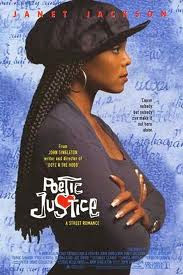
Poetic Justice: http://vimeo.com/40537464
The Big Lie
I believe that the "big lie" that romance films tell women is that eventually you will find your one true love and you guys will get married and live "Happily Ever After". Realistically, this will never happen. Not saying that as women we will never find someone to spend the rest of our life with, but the way that films portray it, isn't realistic. I'm not a huge fan of the Romance Genre because its' so predictable.
Monday, April 21, 2014
Manatu
The "Great lie" that romance novels and films present is this sort of socially embedded outlook that restricts how female characters are depicted. It restricts the complex things about their personalities like ambitions, sexuality, and intelligence. The "Happily Ever After" narrative fits well with this part. It is this sort of narrative that represses these interesting things about female characters. These narratives depict men as ambitions go getters out to solve problems and progress while women are depicted as contented characters looking to settle down and stay put.
The "Big Lie"
In my opinion, romance novels and films present a lot of "lies" and perpetuate a false idea of reality. Most romance stories in books and movies follow a similar pattern; boy meets girl, some kind of spark happens, a conflict occurs, and then finally, the conflict is resolved leading to a happy ending. Not all follow this completely down to every step, but the ideas are always the same. The man is supposed to be romantic and attentive to the needs of the woman while the woman is supposed to be rescued and improved by the man.
Most women are looking for their "happily ever after" and are striving to find that with every relationship. The problem is the way that they movies portray this. Women expect to be swept off their feet by men and get that princess wedding that they've seen in the movies, but that is not reflective of reality and true relationships. A lot of women are stuck because their expectations about romance in life are reflective of the movies, but I think that if a woman can be accepting of the fact that life is not a movie, we can move on and stop chasing that fallacy.
Most women are looking for their "happily ever after" and are striving to find that with every relationship. The problem is the way that they movies portray this. Women expect to be swept off their feet by men and get that princess wedding that they've seen in the movies, but that is not reflective of reality and true relationships. A lot of women are stuck because their expectations about romance in life are reflective of the movies, but I think that if a woman can be accepting of the fact that life is not a movie, we can move on and stop chasing that fallacy.
The Truth About "Happily Ever After"
Rom-coms and romance novels all tell the same story using a different version: boy meets girl; boy and/or girl is with the wrong lover(s); boy and/or girl dump lover(s); other small conflict(s) ensue; boy and girl fall in love; they live happily ever after... THE END. The "Big Lie" about these types of stories in media is that the once-upon-a-times and happily-ever-afters are not an accurate representation of reality which leads to the confusion of real women in the real world who attempt to find this mythological ideology of "true love." Stories of eventually finding your knight in shining armor or of kissing a frog who magically transforms into a prince are strictly fantasy, yet (female) audiences interpret them as depictions of reality leading women on a wild goose chase to find their "soul mate." Because of the power mainstream media have on audiences, women are confused and dissatisfied when real men don't live up to the unrealistic or fantastical expectations set for them. They, then thinking they made a poor decision, will leave their partner in search of yet another wild goose chase allowing the vicious circle to continue.
Subscribe to:
Posts (Atom)